
Is hands-on simulation better than video training for Botox?
Clinicians around Morristown, and those willing to travel into the wider metro area for a course, can pick training taught by video or training built around hands-on simulation. The decision is whether hands-on practice changes what you can do with a needle.
Higher practical test scores after hands-on practice
PubMed Central carries a paper on training for aesthetic providers that reports on this exact comparison.
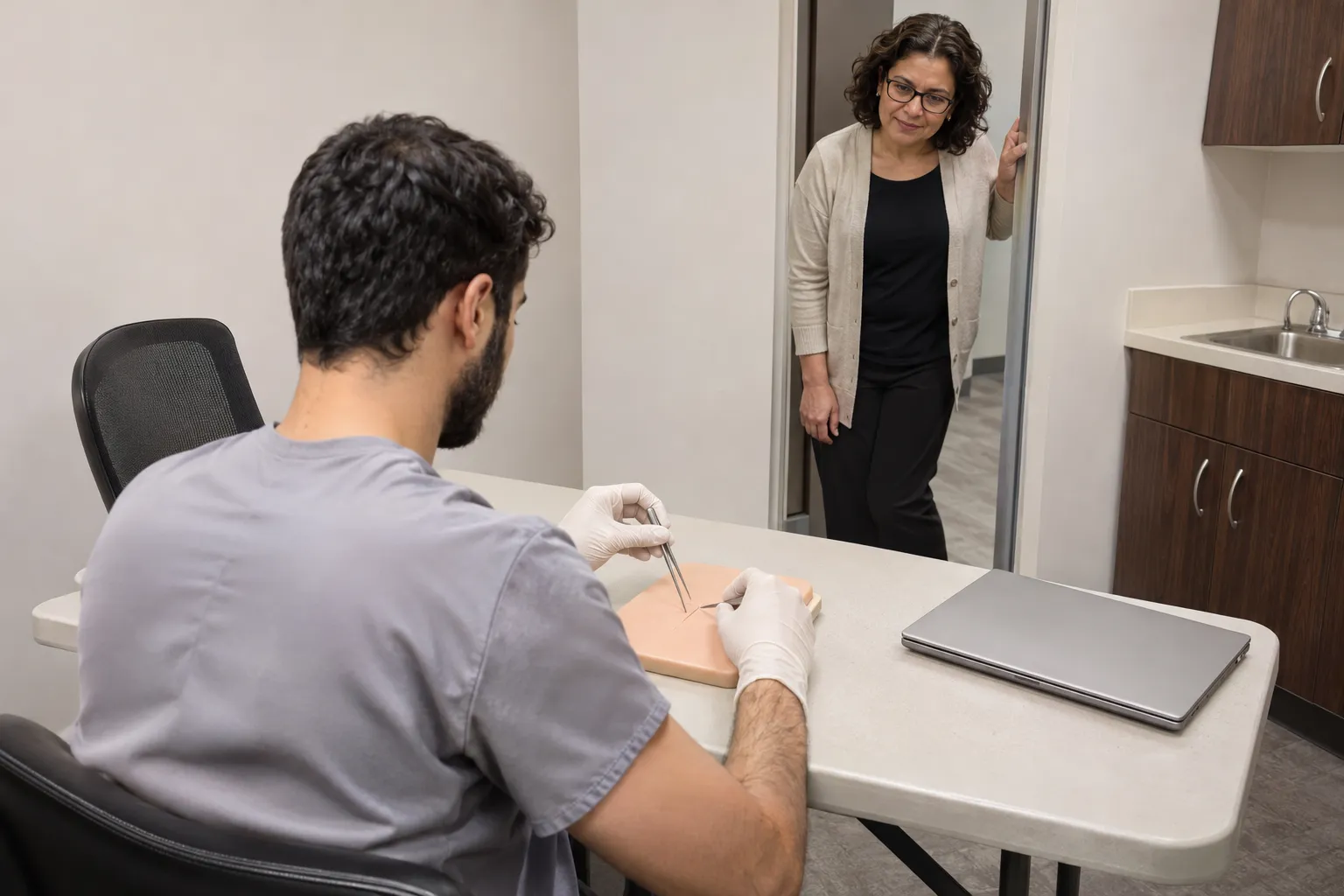
One study finds simulation-based training has shown to be effective and demonstrates trainees who underwent hands-on simulation training for botulinum toxin injections have significantly higher practical tests scores compared to those who receive video training only.
The result is about practical test scores. It compares trainees who practiced hands-on with trainees who only watched video.
How to read that result
Video and simulation are not rivals in every respect. Video is a fair way to see a technique before you try it. The study finding concerns who scored higher when the test was practical.
For background, a general reference entry on botulinum toxin covers the substance itself. The Dreyfus model of skill acquisition is a general framework for how people acquire skills, and it is a useful lens when you ask what a course asks you to do rather than watch.
The wider discussion sits in a review titled The Need for Regulated Training and Certification for Providers Entering into Aesthetic Medicine, which is worth reading before you choose a format.
Routine details and real decision points
A video library as part of a course is routine. A syllabus that has no hands-on component, or does not say whether practice is on a model, is a decision point. Ask what you will physically do, and how often.
What I would ask before booking
Ask the program: "In which session will I inject, and who will watch me do it?" If the answer is vague, treat the course as video training, and price it that way.